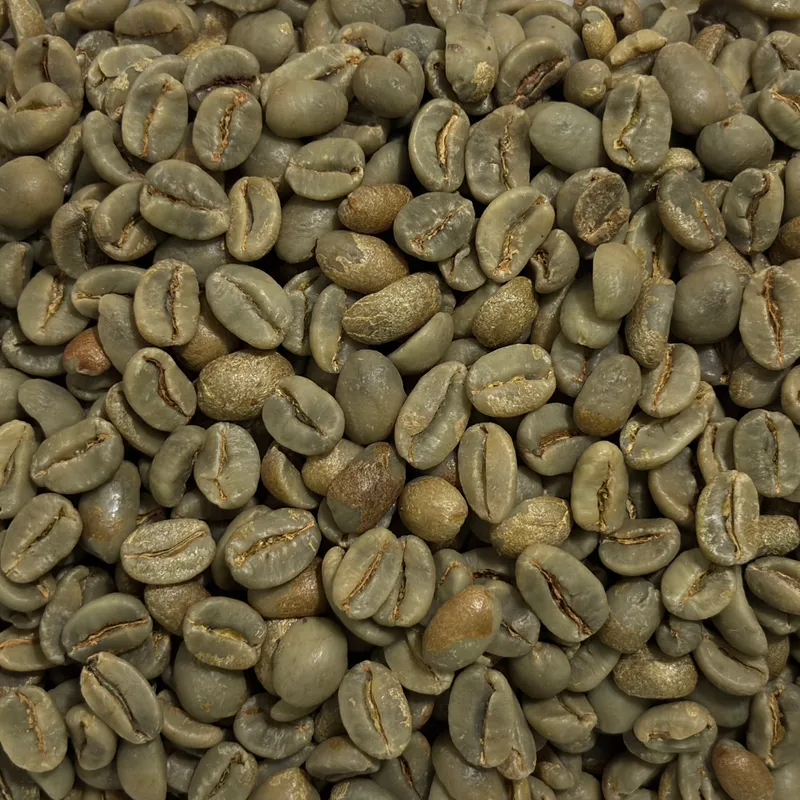
EUDR-Compliant Gayo Coffee Beans: Smallholder Traceability Guide for Wholesale Buyers
December 30, 2025. That date is already circled on every coffee importer’s calendar. The EU Deforestation Regulation (EUDR) goes into full effect, and if you’re buying Gayo green beans for the European market, your paperwork just got a lot heavier. No more relying on a cooperative’s word that the coffee is “deforestation-free.” You need plot-level geolocation polygons, proof that no forest was cleared after 2020, and a due-diligence statement that holds up under audit.
Gayo coffee matters to EU specialty buyers because of what it is: high-altitude Arabica grown by smallholders in Aceh’s highlands, often producing peaberry and winey micro-lots that command premium prices. But those same smallholders—more than 80% of Gayo farmers work less than two hectares—are the ones most exposed to the compliance gap. They hold social-forestry permits (HKm or HTR) that don’t always map neatly onto the EU’s polygon requirements. The result? A real risk of shipment seizures and fines up to 4% of annual turnover.
This guide is for procurement managers, roasters, and supply-chain leads who need to navigate EUDR without losing access to Gayo’s best lots. I’ll walk through the mandate, the gaps, a due-diligence checklist, and sourcing strategies that protect your margins—and your reputation.
The EUDR Mandate & Why Gayo Smallholders Face Systemic Gaps
The EUDR requires that any coffee imported into the EU be “deforestation-free”—meaning no forest was converted to agricultural land after December 31, 2020. For green beans, that means you need to collect:
- Plot-level geolocation polygons (not just a point on a map) for every farm that contributed to a lot.
- A due-diligence statement signed by the operator (that’s you or your supplier) confirming the coffee meets the rule.
- Proof of legal production under the laws of the country of origin.
Sounds straightforward until you look at how Gayo coffee actually gets to market. Most farmers are part of cooperatives or farmer groups that aggregate cherries from hundreds of tiny plots. Those plots are often inside HKm (Hutan Kemasyarakatan) or HTR (Hutan Tanaman Rakyat) social-forestry areas—government-allocated land where farmers have use rights but not full ownership. The polygons for these areas are sometimes drawn at the community level, not the individual plot level. That’s a problem, because the EUDR expects polygons that correspond to the actual land where the coffee was grown.
I’ve seen cooperatives try to submit a single polygon for a whole village. That won’t fly. The regulation is explicit: you need the boundary of each parcel. If a cooperative can’t provide that, your shipment could be flagged. And the penalties are harsh—up to 4% of your company’s annual EU turnover, plus the cost of seized goods and legal fees. For a mid-size roaster importing a few containers of Gayo peaberry, that’s a six-figure risk.
Due-Diligence Framework for Gayo Green Bean Procurement
So how do you actually verify that your Gayo green beans are EUDR-compliant? You can’t just take a supplier’s word. Here’s a step-by-step checklist I’ve built from working with Aceh-based cooperatives and EU importers.
Step 1: Demand Plot-Level Polygons, Not Village Boundaries
Ask your supplier for a GeoJSON or KML file containing the polygon coordinates of every farm that contributed to the lot. If they can’t provide that, ask why. Some cooperatives are already using mobile apps like Koltiva or Farmforce to map individual plots. If your supplier isn’t using one, they’re behind.
Step 2: Cross-Reference with Deforestation Data
Use a tool like Global Forest Watch or Satelligence to check whether any of those polygons show tree cover loss after December 2020. You can do this yourself for a small fee, or ask your supplier to provide a deforestation-free certificate from a third-party verifier. The Rainforest Alliance’s EUDR-ready certification is one option, but it’s not the only one.
Step 3: Verify Legal Production
For Gayo coffee, legal production often hinges on the social-forestry permit. Ask for a copy of the HKm or HTR permit, plus proof that the farmer group is registered with the local forestry office. If the permit is expired or doesn’t cover coffee cultivation, that’s a red flag.
Step 4: Get a Signed Due-Diligence Statement
The EUDR requires a statement that includes:
– Your company name and contact info.
– The product (green coffee, HS code 0901.11).
– The quantity.
– The country of origin and all polygons.
– A declaration that the coffee is deforestation-free and legally produced.
Your supplier should provide this. If they don’t, you’ll have to draft it yourself—and that means you’re taking on the liability.
Cost-Benefit: AI Farm Monitoring vs. Penalty Exposure
I’ve run the numbers for a typical 20-ton container of Gayo green beans. A one-time polygon mapping exercise for 200 smallholder plots costs around $2,000–$3,000 using a service like Satelligence or Pixxel. Annual monitoring adds another $1,000–$2,000. Compare that to a potential 4% fine on a $500,000 annual EU coffee turnover—that’s $20,000. Plus the cost of a seized shipment (say $50,000). The math is clear: investing in traceability tech is cheaper than the risk.
Sourcing Strategies That Protect Margins & Regulatory Standing
Once you have a due-diligence framework, the next question is how to source Gayo coffee without blowing your budget or losing access to the best lots.
Dual-Track Lot Segregation
Not all Gayo coffee needs to be EU-compliant. If you have buyers outside the EU (Asia, Middle East, domestic US), you can divert non-compliant lots to those markets. That means working with your supplier to keep two separate inventories: one with full traceability, one without. This is common practice now. I know a roaster in Germany who only buys EU-track Gayo peaberry, while his Singapore-based partner takes the rest.
Contract Clause Library
Your purchase contracts need to shift liability. Include clauses that:
– Require the supplier to provide all EUDR documentation.
– Hold the supplier responsible for any fines or seizure costs if their documentation is wrong.
– Allow you to reject a lot if polygons are missing or deforestation is detected.
– Include a force majeure clause that covers regulatory changes—though the EUDR is already set, so this is more for future rules.
I’ve seen contracts where the buyer takes on the due-diligence burden because they trust the supplier. Don’t do that. Make the supplier sign off.
Building a Resilient Supply Chain Across Aceh’s Highlands
Gayo coffee comes from several sub-regions: Takengon, Bener Meriah, and Aceh Tengah. Each has different cooperative structures and varying levels of traceability readiness. I recommend sourcing from cooperatives that are already working with tech providers. For example, the Koperasi Kopi Gayo in Takengon has been piloting plot mapping since 2023. Others are still using paper ledgers. Visit or send a local agent to verify.
Preserving Premium Pricing Through Verified Traceability
Here’s the upside: EUDR compliance isn’t just a cost—it’s a pricing lever. Buyers who can prove their Gayo peaberry or winey micro-lots are fully traceable can command a premium of 10–20% over non-compliant lots. I’ve seen it happen. A roaster in Amsterdam recently paid $8.50/lb for EUDR-verified Gayo peaberry, while the same coffee without documentation sold for $6.80/lb to a Middle Eastern buyer.
Why? Because the EU market is willing to pay for certainty. If you can show a buyer that every bean came from a plot that was forest in 2020 and is still forest today, you’ve removed their biggest risk. That’s worth money.
The key is to build that story into your marketing. Don’t just say “traceable.” Show the polygons. Share the deforestation-free certificate. Let your customer see the map. That’s how you defend your margin.
Ready to source EUDR-compliant Gayo green beans? We work directly with Aceh cooperatives that have plot-level traceability in place. Shop our current lots or request wholesale pricing for container orders.
Sources
https://eur-lex.europa.eu/legal-content/EN/TXT/?uri=CELEX:32023R1115
https://www.perfectdailygrind.com/2024/03/understanding-eudr-for-coffee-importers/
https://www.ico.org/documents/cy2023-24/icc-124-14-e.pdf
https://www.rainforest-alliance.org/business/eudr/
Related reading
Browse related products:
- Java Ijen Volcanic Arabica
- Gayo Carbonic Maceration Natural Green Coffee Beans
- Kopi Luwak Green Coffee Beans
You may also like:
Leave a Reply