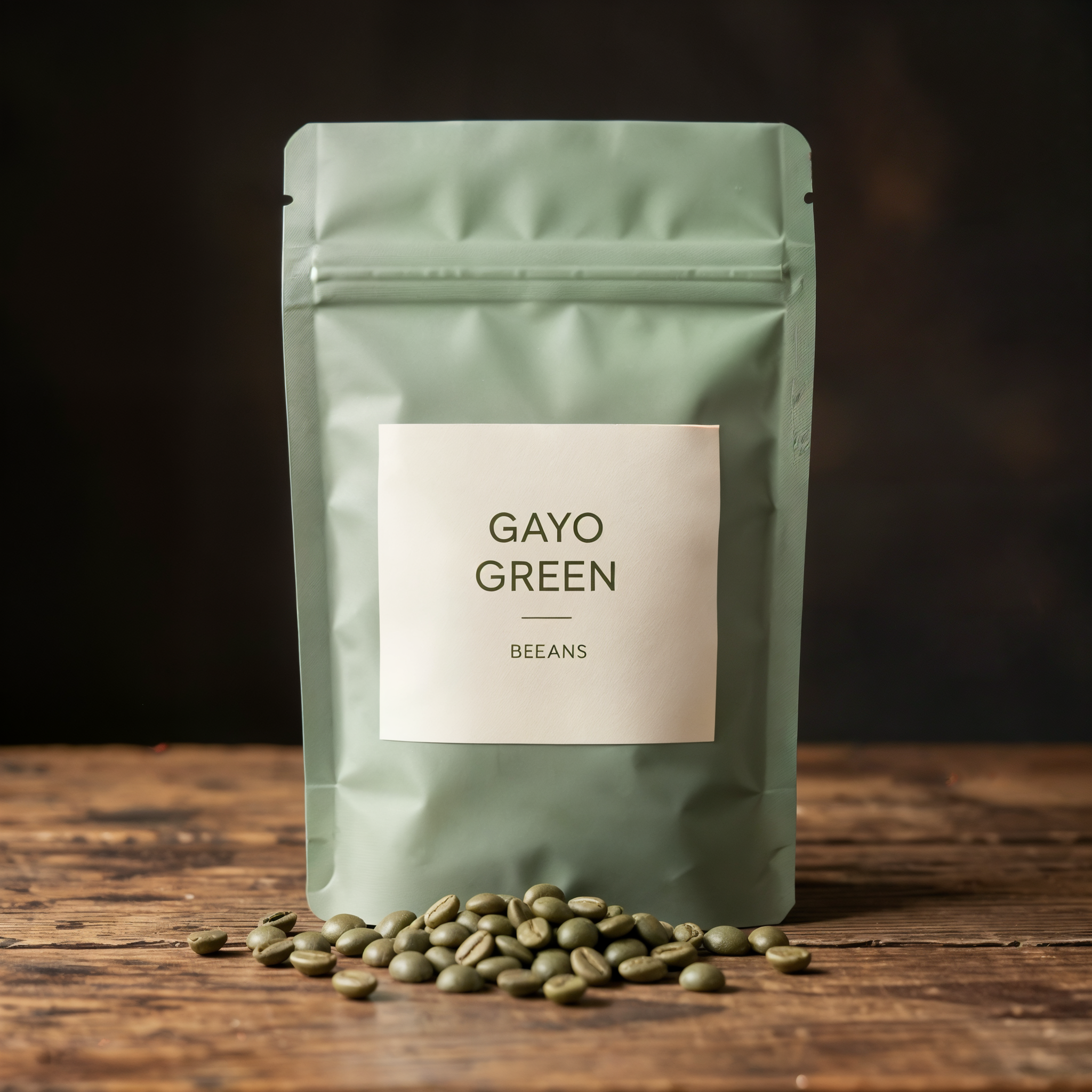
Specialty Gayo Coffee Beans: Premium Arabica from the Aceh Highlands
If you’ve ever cupped a Sumatran coffee that felt like it had more layers than an onion, there’s a good chance it came from Gayo. This region in Aceh, right up in the northern tip of Sumatra, has built a reputation among roasters who want something with real backbone. It’s not delicate. It’s not floral in that washed-Ethiopia way. But what Gayo delivers — heavy body, low acidity, and a savory depth that sticks around — makes it a staple for anyone serious about offering a diverse espresso blend or a single origin that stands up to milk.
We source directly from smallholder cooperatives in the Gayo Highlands. The farmers there grow Arabica: mostly Typica, Bourbon, and S795. These aren’t massive estates. You’re looking at families managing a few hectares, often at elevations between 1,200 and 1,700 meters above sea level. That altitude, combined with volcanic soil and near-constant cloud cover, creates a slow maturation cycle. Slower growth means denser beans, and denser beans pack more complex sugars. That’s the science side of it. The practical result is a coffee that handles a dark roast without turning into ash.
Buying Gayo coffee isn’t just about geography though. The real story — and the thing that trips up a lot of buyers — is how it’s processed.
The Gayo Highlands Advantage: Terroir and Altitude
Let’s get specific about the land itself. The Gayo Highlands sit around Lake Tawar, in the central Aceh region. The soil is volcanic, rich in minerals, and well-draining. The altitude range I mentioned — 1,200 to 1,700 masl — is where specialty Arabica thrives. Go lower, and you risk higher disease pressure and less flavor development. The farmers here work with that narrow sweet spot.
The climate plays its part too. Gayo gets heavy rainfall, but it’s seasonal. The dry months (June through September) are when the main harvest comes in. During those months, the humidity is still high. That’s key for understanding the processing method, which I’ll get to in a minute. The combination of volcanic minerals, consistent cloud cover, and steady rainfall means the coffee cherry develops slowly. You get a bean that’s physically hard and chemically complex. Roasters who buy Gayo often find they can push the roast a bit darker than other high-altitude Arabicas without losing origin character.
Most of the farmers are part of small cooperatives. Some are certified organic, some aren’t, but nearly all use minimal synthetic inputs. The cooperatives handle the initial processing at centralized mills. This is where traceability becomes real. A lot of the coffee you’ll see labeled “Gayo” is actually a blend of cherry from dozens of families. That’s not a bad thing — it creates a consistent regional profile. But if you want a single-farm lot, you need to ask for it specifically. Our current offering is a cooperative blend from the Bener Meriah district. It scores 84 points on the SCA cupping scale, with notes of cedar, dark chocolate, and a hint of pink grapefruit acidity.
Mastering Giling Basah: The Gayo Processing Signature
Here’s where things get interesting. Almost all specialty coffee from Gayo uses a method called Giling Basah. That’s Indonesian for “wet hulling.” If you’re used to washed or natural processed coffees, this will feel like a different world.
Here’s how it works. After harvest, the coffee cherry is depulped — the skin and some of the sticky mucilage gets removed. Then the beans are put into fermentation tanks for a short period, usually 12 to 24 hours. After that, they’re washed and then laid out to dry. But here’s the twist: they’re only dried to about 30 to 40 percent moisture content. That’s still quite wet compared to the 11 to 12 percent you’d aim for in a fully washed coffee. At that point, the beans still have the parchment layer on them. That’s the thin, papery husk.
Then comes the wet hulling. The beans are run through a hulling machine that strips off the parchment while the bean is still soft and pliable. Once hulled, the beans go back out to finish drying, usually on patios or raised beds, down to the target 11 to 12 percent moisture.
Why go through all that trouble? Two reasons.
First, the short fermentation and partial drying under parchment limits the development of acidity. That’s why Gayo coffee has that famously low, round acidity. It also produces a heavy, syrupy body. The coffee feels thick in the mouth, almost like tea in some cases.
Second, the wet hulling process creates a specific set of flavor compounds. You’ll often hear terms like “herbal,” “earthy,” or “spicy” used for Sumatran coffee. That’s a direct result of Giling Basah. It’s not defects — it’s the method. When done right, you get clean, complex cups with a savory profile that works wonders in espresso blends.
But there’s a challenge. Giling Basah is notoriously hard to control. The beans are vulnerable during the partial drying stage. If the humidity spikes or the drying is inconsistent, you risk developing molds or off-flavors. That’s why consistency can vary year to year, or even lot to lot. The best processors monitor moisture content constantly and keep the coffee moving. The cooperatives we work with use digital moisture meters and turn the beans by hand every couple of hours during drying. It’s labor intensive, but it’s the only way to hit those 84-plus cupping scores.
For a roaster, this means you need to calibrate your roast profile differently than you would for a washed Central American. The bean density is higher, and the internal moisture distribution can be uneven due to the wet hulling. I usually start with a lower charge temperature — around 195°C (383°F) — and extend the drying phase by about 30 seconds compared to my standard profile. That gives the bean time to heat through evenly before first crack. If you rush it, you’ll get a baked flavor. Take your time, and you’ll get chocolate and spice with a clean finish.
Buying Practicalities: What You Need to Know
If you’re looking to buy Gayo coffee, there are a few things to watch for.
First, check the moisture content on the analysis sheet. It should be between 10.5 and 12 percent. Anything above that risks mold in transit. Second, ask for a recent cupping score. Anything above 83 is considered specialty. Our current lot scores 84. Third, understand that Gayo coffee has a reputation for being “wild” or “dirty.” That’s outdated. Modern processing in Gayo has improved massively. A clean, well-processed lot should have no taints — just that deep, earthy spice.
We offer Gayo green beans in 30 kg jute bags, vacuum-sealed with GrainPro liners for freshness. We also do smaller sample bags for roasters who want to test the profile before committing to a full bag.
Pricing varies by season and availability. As of this writing, our current lot is priced at $6.50 per pound FOB. That includes the GrainPro liner and all export documentation. For wholesale orders over 500 kg, we can negotiate volume pricing.
Ready to try a bag? Check our current Gayo offerings here.
Need to set up a wholesale account or request a custom quote? Get in touch for wholesale pricing.
We’re happy to send a cupping sample so you can taste the profile for yourself. Just mention this article when you reach out.
Sources:
– Specialty Coffee Association. “Coffee Terroir and Flavor.” https://sca.coffee/research/coffee-terroir-and-flavor
– Percobatan Coffee Research Institute. “Gayo Highlands Coffee Overview.” https://www.percobatan.org/gayo-highlands-coffee-overview
– Coffee Brewing Methods. “The Giling Basah Process Explained.” https://coffee-brewing-methods.com/giling-basah-process
Sources
https://sca.coffee/research/coffee-terroir-and-flavor
https://www.percobatan.org/gayo-highlands-coffee-overview
https://coffee-brewing-methods.com/giling-basah-process
Related reading
Browse related products:
- Bali Wine Roasted Coffee Beans
- Java Preanger Green Coffee Beans
- Gayo Arabika Grade 1 – Whole Bean 500g
You may also like:
Leave a Reply